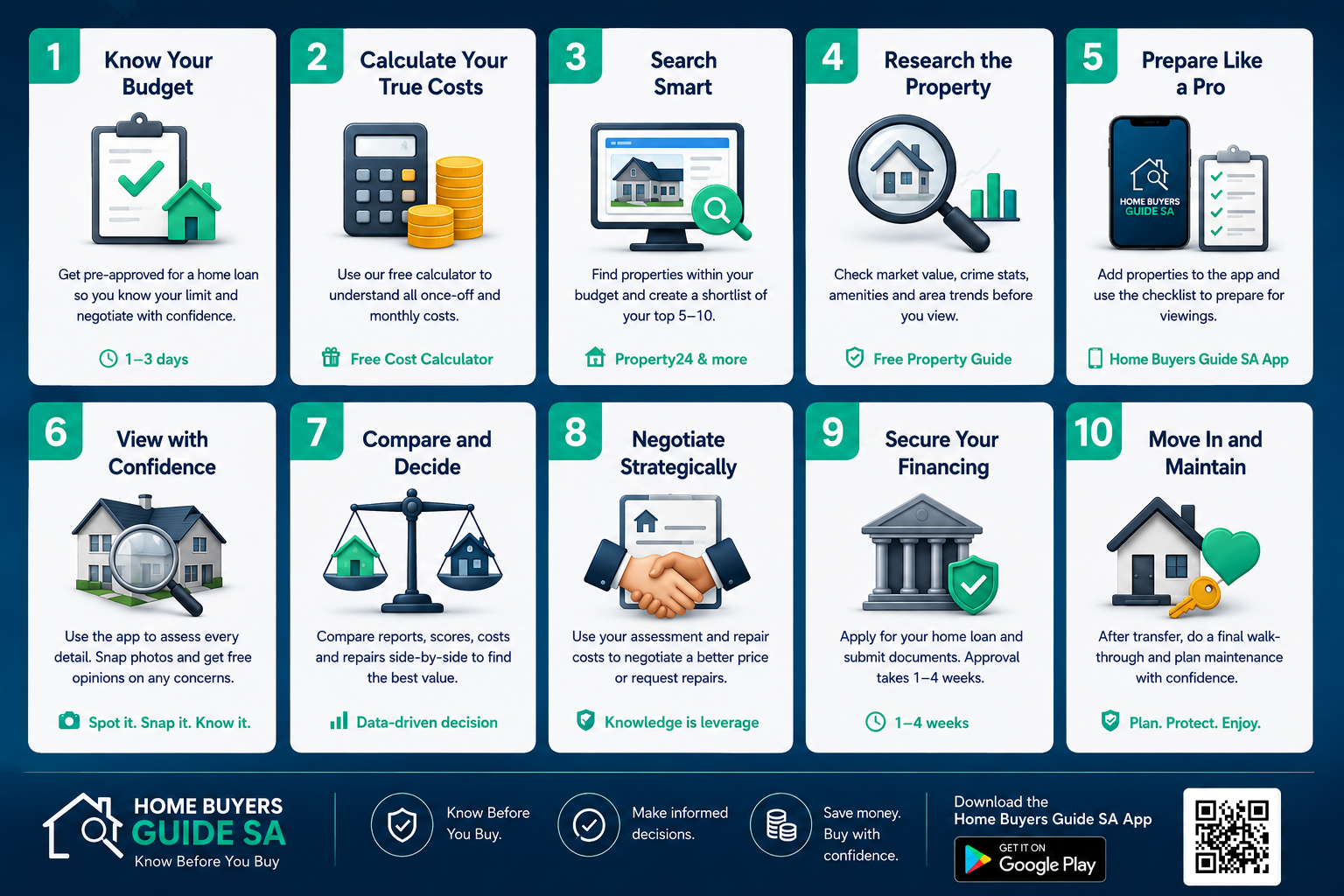
A step-by-step roadmap to buying your dream property with confidence, avoiding costly surprises, and making informed decisions every step of the way.
Did you know? 70% of South African homeowners face unexpected repair costs within their first year of ownership, often exceeding R50,000. These surprises stem from skipping crucial steps in the buying process. This guide ensures you make informed decisions, understand true costs, and avoid financial stress after moving in.
Get Pre-Approved for a Home Loan. Visit your bank to obtain a pre-approval certificate. They'll assess your income, expenses, and credit profile to determine your maximum loan amount. This crucial step gives you a realistic budget and strengthens your negotiating position when making offers. Pre-approval typically takes 1-3 days and shows sellers you're a serious buyer.
Understand the Full Financial Picture. Your home loan is just one part of the equation. Use the Property Inspector Calculator to determine your once-off costs including transfer duties (government tax), attorney fees, and bond registration costs. These typically range from R30,000 to R80,000+ depending on property price. Factor in monthly costs like rates, levies, insurance, and maintenance too.
🔗 Use Free Cost CalculatorFind Properties Within Your Budget. Browse Property24, Private Property, and other listing sites for homes aligned with your approved loan amount. Create a shortlist of 5-10 properties that meet your must-have criteria: location, bedrooms, size, and features. Remember to account for your deposit (typically 10-20% of purchase price) when setting your search parameters.
Know What You're Really Buying. Before viewing, research each property's true market value, crime statistics, nearby amenities, and area trends. This intel helps you spot overpriced listings and red flags. Access free insights from Standard Bank's Home Services Property Guide or invest in detailed Lightstone reports (R200-R500). Understanding if a R1.5M asking price is justified for a R1M property helps you negotiate wisely and assess if improvements warrant the premium.
🔗 Standard Bank Property GuideSet Yourself Up for Success. Download the Property Inspector app and add your shortlisted properties. Set viewing appointments and review the app's comprehensive checklist covering structural, electrical, plumbing, and cosmetic aspects. Visit PropertyInspector.site for expert guidance on what issues to prioritize and common warning signs. Preparation ensures you ask the right questions and spot problems estate agents might overlook.
🔗 Get Viewing GuidanceConduct a Thorough Assessment. During viewings, use the Property Inspector app as your guide. It walks you through every room and outdoor space, prompting you to check critical elements like foundation cracks, roof condition, plumbing function, electrical safety, and damp issues. Take photos of concerns, add detailed notes, and document everything. Not sure if something is serious? The app's photo feature is your secret weapon - simply snap pictures of questionable issues (wall cracks, roof damage, plumbing concerns) and show them to professionals for free opinions. Many builders, plumbers, or electricians can identify major problems just by looking at a photo, giving you expert insights at zero cost before committing to a purchase. The app also suggests essential questions: What are the monthly costs? What's included in the sale? Recent improvements? Any upcoming special levies? This systematic approach ensures you don't miss costly problems hidden behind fresh paint.
Make an Informed Choice. Review assessment reports for all viewed properties side-by-side. Compare rating scores across categories, monthly cost estimates, required repairs, and how each property meets your expectations. The data-driven approach removes emotion from decision-making and highlights the best value option. Consider both immediate livability and long-term maintenance costs when making your final choice.
Use Evidence to Your Advantage. Armed with your detailed assessment report, make an informed offer. If you identified R100,000 worth of necessary repairs (roof, plumbing, electrical), use this evidence to negotiate a lower purchase price or request seller repairs before transfer. Present specific findings rather than vague concerns. Your thorough documentation demonstrates you're a serious buyer who's done their homework, giving you stronger negotiating leverage.
Finalize Your Home Loan. Once your Offer to Purchase is accepted by the seller, formally apply for your home loan. Submit all required documentation promptly: ID, proof of income, bank statements (usually 3 months), and credit consent. The bank will conduct a property valuation to confirm the purchase price is reasonable. Loan approval typically takes 1-4 weeks. Stay responsive to your bond originator's requests to avoid delays in the transfer process.
Start Your Homeownership Journey Right. After bond registration and transfer (typically 8-12 weeks), collect your keys and move in. Conduct a final walk-through using the Property Inspector app to create a baseline condition report. Consider hiring a professional inspector (R2,500-R5,000) for a comprehensive assessment, including systems you couldn't fully test during viewings. This detailed report becomes your maintenance roadmap, prioritizing tasks and budgeting repairs over the next 1-3 years. Proactive maintenance prevents small issues from becoming expensive emergencies.
Following these 10 steps transforms your home buying experience from stressful and uncertain to confident and informed. You'll avoid the shock of discovering R50,000+ in unexpected repairs after moving in. You'll negotiate better prices based on actual property conditions. Most importantly, you'll maintain the joy and excitement of homeownership instead of experiencing buyer's remorse. Knowledge is your best investment protection.
Download Property Inspector now and get expert guidance through every property viewing
📱 Download Free App